인문학
사회과학
자연과학
공학
의약학
농수해양학
예술체육학
복합학
 DBpia AI
 AI 에이전트
 AI 아이디어
 AI 리더
 AI 뷰어
 Citeasy
크롬 서지관리 다운로드
지원사업
학술연구/단체지원/교육 등 연구자 활동을 지속하도록 DBpia가 지원하고 있어요.
커뮤니티
연구자들이 자신의 연구와 전문성을 널리 알리고, 새로운 협력의 기회를 만들 수 있는 네트워킹 공간이에요.
초록·키워드
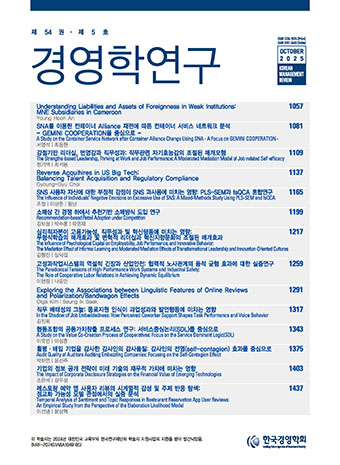
This study aims to examine the relationships between linguistic features in online reviews and two well-known phenomena in digital consumer behavior: opinion polarization and the bandwagon effect. Opinion polarization is assessed through the skewness of review rating distributions, while the bandwagon effect is measured using lagged regression analysis to determine how earlier ratings influence later ones. The analysis uses approximately 50,000 customer reviews from 50 products and services collected from three major U.S.-based e-commerce platforms. By applying regression analysis, this study empirically explores the statistical connection between specific linguistic features in review texts and both polarization and the bandwagon effect. The results show that lexical density, a measure that combines lexical diversity and review length, has a statistically significant negative relationship with both polarization and the bandwagon effect. Meanwhile, readability was not significantly linked to polarization but was positively related to the bandwagon effect. Unlike previous research, this study emphasizes the role of linguistic features in contributing to information distortion within online review environments, providing a more systematic perspective. These findings offer empirical insights for businesses aiming to establish fair and trustworthy review systems.
본문·목차


인공지능 문자 인식 모델을 통해 추출된 텍스트로, 일부 오타나 오류가 포함될 수 있으나 지속적으로 개선 중입니다.
오류를 발견하셨다면 해당 부분을 드래그한 후 ' 를 통해 신고해주세요.
오류를 발견하셨다면 해당 부분을 드래그한 후 ' 를 통해 신고해주세요.
최근 본 자료 전체보기




UCI(KEPA) : I410-151-26-02-094295293

