인문학
사회과학
자연과학
공학
의약학
농수해양학
예술체육학
복합학
 DBpia AI
 AI 에이전트
 AI 아이디어
 AI 리더
 AI 뷰어
 Citeasy
크롬 서지관리 다운로드
지원사업
학술연구/단체지원/교육 등 연구자 활동을 지속하도록 DBpia가 지원하고 있어요.
커뮤니티
연구자들이 자신의 연구와 전문성을 널리 알리고, 새로운 협력의 기회를 만들 수 있는 네트워킹 공간이에요.
피인용 0
초록·키워드
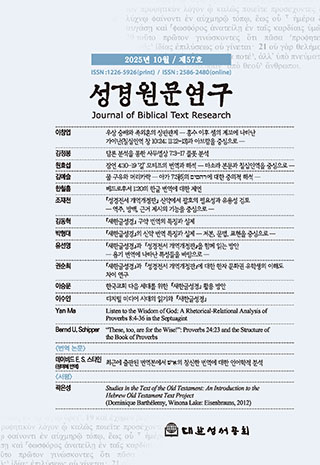
Proverbs 8:4-36, the speech of personified wisdom, is arguably the most discussed text in the book of Proverbs. Biblical scholars generally interpret the Hebrew text of this passage as that Proverbs 8:4-36 is the self-praise of wisdom, which explains the significance, origin, and authority of wisdom. However, this major view may not necessarily stand when the Greek text of Proverbs 8:4-36 in Septuagint is examined. The translation of Proverbs is highly paraphrastic. The Greek text of this passage may express a different focus from the Hebrew text. In addition, the linguistic features of Proverbs 8:4-36, especially its rhetorical structure, that are essential for the appropriate interpretation of this passage have not been fully assessed in the current biblical scholarship. This paper conducts conduct a rhetorical-relational analysis based on Rhetorical Structure Theory (RST) to identify the core section of Proverbs 8:4-36 in Septuagint, namely the most important message conveyed in this passage. This method provides a framework to assess the linguistic features of the biblical text and may offer new insights into the existing research of Proverbs 8:4-36. According to the rhetorical-relational analysis in this paper, I argue that Proverbs 8:4-36 is an appeal, the key message of which is to listen to the wisdom. Those statements explaining the significance, origin, and authority of wisdom are supporting information used to justify the appeal of listening to wisdom.
본문·목차


인공지능 문자 인식 모델을 통해 추출된 텍스트로, 일부 오타나 오류가 포함될 수 있으나 지속적으로 개선 중입니다.
오류를 발견하셨다면 해당 부분을 드래그한 후 ' 를 통해 신고해주세요.
오류를 발견하셨다면 해당 부분을 드래그한 후 ' 를 통해 신고해주세요.
최근 본 자료 전체보기




UCI(KEPA) : I410-151-26-02-094537090

