인문학
사회과학
자연과학
공학
의약학
농수해양학
예술체육학
복합학
 DBpia AI
 AI 에이전트
 AI 아이디어
 AI 리더
AI 리더
 AI 뷰어
AI 뷰어
 Citeasy
크롬 서지관리 다운로드
Citeasy
크롬 서지관리 다운로드
지원사업
학술연구/단체지원/교육 등 연구자 활동을 지속하도록 DBpia가 지원하고 있어요.
커뮤니티
연구자들이 자신의 연구와 전문성을 널리 알리고, 새로운 협력의 기회를 만들 수 있는 네트워킹 공간이에요.
초록·키워드
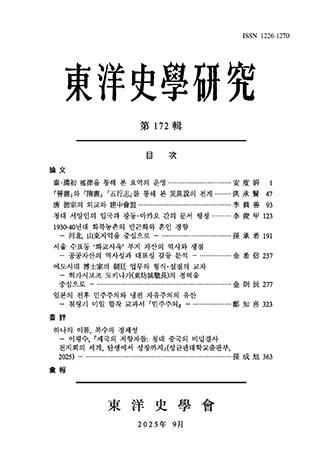
This study examines the historical development and current disputes surrounding the “Chinese Assembly Hall” property located in Supyo-dong, Jung-gu, Seoul, with a focus on the historical significance and contested legitimacy of communal ownership within the Chinese community in Korea. The Chinese Chamber of Commerce was originally situated on the left side of what is now the street in front of the Embassy of the People’s Republic of China in Seoul (館前街)—a historically symbolic area during the late Joseon Dynasty and Japanese colonial period. Under Japanese colonial urban redevelopment policy, the Chamber was forcibly relocated, and the Supyo-dong site was designated as its replacement. After the Korean War, the building was destroyed and repurposed as a shelter for displaced persons. Nevertheless, the site continued to be perceived within the community as a locus of historical continuity and collective meaning.
In recent years, disputes have arisen between the Taipei Representative Office in Korea and the local Chinese Association regarding the development of this property. While the Representative Office asserts its legal authority based on diplomatic registration and its status as the official mission of the Republic of China (Taiwan), the Chinese Association emphasizes its long-standing role in managing and utilizing the site for communal purposes. Although both parties acknowledge the site as a shared asset of the Chinese community in Korea, conflicting views regarding procedural legitimacy and representation have intensified internal divisions.
This study analyzes these conflicts through a wide range of historical documents, showing that the dispute is rooted not only in legal and diplomatic claims, but also in competing interpretations of communal legitimacy based on accumulated historical practices and lived experience. The case illustrates how the Chinese community in Korea continues to negotiate its identity and rights through the intersection of historical memory, institutional authority, and present-day realities.
In recent years, disputes have arisen between the Taipei Representative Office in Korea and the local Chinese Association regarding the development of this property. While the Representative Office asserts its legal authority based on diplomatic registration and its status as the official mission of the Republic of China (Taiwan), the Chinese Association emphasizes its long-standing role in managing and utilizing the site for communal purposes. Although both parties acknowledge the site as a shared asset of the Chinese community in Korea, conflicting views regarding procedural legitimacy and representation have intensified internal divisions.
This study analyzes these conflicts through a wide range of historical documents, showing that the dispute is rooted not only in legal and diplomatic claims, but also in competing interpretations of communal legitimacy based on accumulated historical practices and lived experience. The case illustrates how the Chinese community in Korea continues to negotiate its identity and rights through the intersection of historical memory, institutional authority, and present-day realities.
본문·목차


인공지능 문자 인식 모델을 통해 추출된 텍스트로, 일부 오타나 오류가 포함될 수 있으나 지속적으로 개선 중입니다.
오류를 발견하셨다면 해당 부분을 드래그한 후 ' 를 통해 신고해주세요.
오류를 발견하셨다면 해당 부분을 드래그한 후 ' 를 통해 신고해주세요.
최근 본 자료 전체보기




UCI(KEPA) : I410-151-26-02-094541512

