인문학
사회과학
자연과학
공학
의약학
농수해양학
예술체육학
복합학
 DBpia AI
 AI 에이전트
 AI 아이디어
 AI 리더
 AI 뷰어
 Citeasy
크롬 서지관리 다운로드
지원사업
학술연구/단체지원/교육 등 연구자 활동을 지속하도록 DBpia가 지원하고 있어요.
커뮤니티
연구자들이 자신의 연구와 전문성을 널리 알리고, 새로운 협력의 기회를 만들 수 있는 네트워킹 공간이에요.
초록·키워드
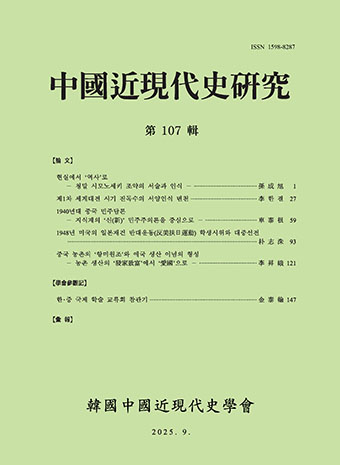
This study analyzes the 1948 student movement opposing U.S. support for Japan’s reconstruction in postwar China, focusing on the demonstrations in Shanghai and Beiping. Unlike earlier protests that demanded famine relief or an end to the civil war, these movements reframed the U.S. policy reversal toward Japan—seemingly a distant foreign affairs issue—into an urgent national crisis. In both cities, students used May commemorations to build inter-school alliances and establish federations that laid the groundwork for collective action. The June 5 demonstration in Shanghai was suppressed by government encirclement and armed repression, yet its failure became a turning point that informed the tactical shift of the Beiping protest. On June 9, Beiping students adopted strategies of dispersed departure and urban convergence, combining street theater, slogans, and civic engagement to carry out the protest. Meanwhile, Shanghai students responded to official denunciations of “treason” by convening a gongduanhui (public adjudication assembly) on June 26, redefining their actions as patriotic and autonomous while securing support from intellectuals and professional groups. This study demonstrates the autonomy and strategic characteristics of student activism under the late Nationalist regime, while also contributing to an understanding of how anti-American sentiment spread in postwar Chinese society.
본문·목차


인공지능 문자 인식 모델을 통해 추출된 텍스트로, 일부 오타나 오류가 포함될 수 있으나 지속적으로 개선 중입니다.
오류를 발견하셨다면 해당 부분을 드래그한 후 ' 를 통해 신고해주세요.
오류를 발견하셨다면 해당 부분을 드래그한 후 ' 를 통해 신고해주세요.
최근 본 자료 전체보기




UCI(KEPA) : I410-151-26-02-094529347

