인문학
사회과학
자연과학
공학
의약학
농수해양학
예술체육학
복합학
 DBpia AI
 AI 에이전트
 AI 아이디어
 AI 리더
 AI 뷰어
 Citeasy
크롬 서지관리 다운로드
지원사업
학술연구/단체지원/교육 등 연구자 활동을 지속하도록 DBpia가 지원하고 있어요.
커뮤니티
연구자들이 자신의 연구와 전문성을 널리 알리고, 새로운 협력의 기회를 만들 수 있는 네트워킹 공간이에요.
피인용 0
초록·키워드
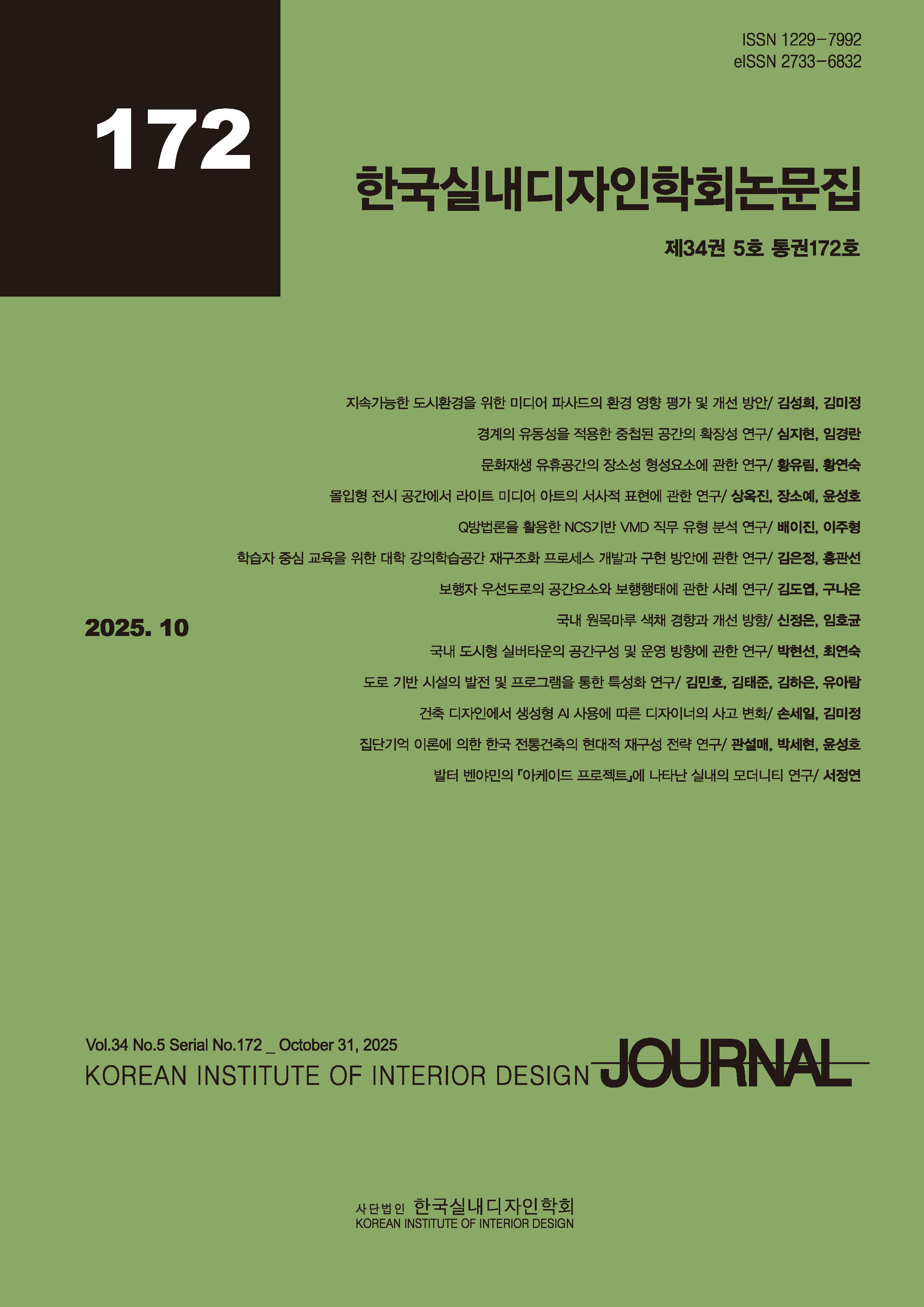
As the integration of AI into design practice becomes increasingly prevalent, understanding its influence on designers’ thinking is important. However, research on the use and collaboration of AI in design fields is somewhat focused on generative AI itself, such as usability and performance, and there is relatively little research on its impact on users. This research investigated the effect of generative artificial intelligence on designers' thinking during the early design phase of architecture, examining how AI affects designers' divergent thinking and thinking shifts. Divergent thinking is a crucial component of creative thinking, playing a vital role in exploring diverse possibilities and broadening the scope of thought. Three men in their 20s, skilled in hand sketching, CAD, and 3D modeling, performed tasks of similar difficulty in both sessions, both with and without AI. The entire process was recorded and analyzed using a customized evaluation matrix. The results of this research confirmed that generative AI has a significant impact on designers' thinking patterns and divergent thinking. These results suggest that generative AI has the potential to meaningfully support divergent thinking, a key component in the early stages of architectural design. These findings demonstrate that generative AI can have a positive impact on divergent thinking, a skill essential for architectural design, education, and future research utilizing AI.
본문·목차


인공지능 문자 인식 모델을 통해 추출된 텍스트로, 일부 오타나 오류가 포함될 수 있으나 지속적으로 개선 중입니다.
오류를 발견하셨다면 해당 부분을 드래그한 후 ' 를 통해 신고해주세요.
오류를 발견하셨다면 해당 부분을 드래그한 후 ' 를 통해 신고해주세요.
최근 본 자료 전체보기




UCI(KEPA) : I410-151-26-02-094528064

