인문학
사회과학
자연과학
공학
의약학
농수해양학
예술체육학
복합학
 DBpia AI
 AI 에이전트
 AI 아이디어
 AI 리더
 AI 뷰어
 Citeasy
크롬 서지관리 다운로드
지원사업
학술연구/단체지원/교육 등 연구자 활동을 지속하도록 DBpia가 지원하고 있어요.
커뮤니티
연구자들이 자신의 연구와 전문성을 널리 알리고, 새로운 협력의 기회를 만들 수 있는 네트워킹 공간이에요.
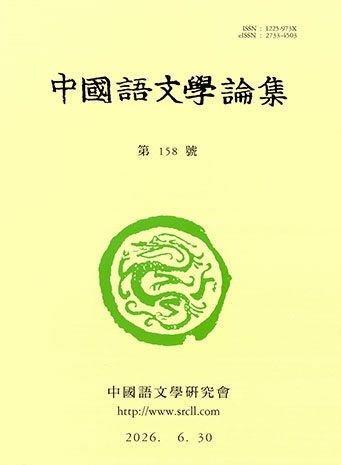
LLM 기반 현대 중국어 동결식 추출 및 언어적 특징 분석 A Study on LLM-Based Extraction of RVCs in Modern Chinese and Their Linguistic Characteristics
논문 기본 정보
- 저자정보
- 저널정보
- 중국어문학연구회 중국어문학논집 中國語文學論集 第158號
- 발행연도
- 2026.6
- 수록면
- 85 - 121 (37page)
- DOI
- 10.25021/JCLL.2026.6.158.85
피인용 0
LLM 기반 현대 중국어 동결식 추출 및 언어적 특징 분석
초록·키워드
This study reexamines the linguistic characteristics of Verb-Resultative Complement Compounds (VRCs) in Modern Chinese based on authentic language use. A specific corpus of approximately 26,000 VRC sentences was constructed by collecting and refining raw data using LLM-based generative AI, and a comprehensive quantitative analysis was conducted using #LancsBox X.
The findings are as follows. First, the perfective aspect marker le (了) , exhibited the highest frequency in the corpus, confirming a dominant co-occurrence with VRCs. Co-occurrence with guo (過) was restricted; co-occurrence with zhe (著) was limited but possible, whereas with zai (在) it was unattested. Second, the high frequency of de (的) revealed notable VRC usage in shi-de (是-的) and hui-de (會-的) constructions—noteworthy given the potential tension between focus-marking and the resultative semantics of VRCs. Third, collocation analysis (L1–L5, R1–R3) identified strong collocates including ba (把), bei (被), dou (都), jiu (就), and shi (是), suggesting an association between VRCs and emphatic sentence functions. The strongest rightward collocate was le (了), reaffirming “VRC-le (了)” as the canonical pattern. Finally, although ba (把) constructions accounted for only one-third of object-taking VRCs in raw frequency, they encompassed 76% of all attested complement types, confirming the ba (把)-construction as the primary syntactic environment for VRC combinatorial diversity.
This study demonstrates that LLM-based generative AI enables the efficient construction of a linguistically specific corpus at scale. However, the risk of AI misclassification—as seen in the underextraction of negative constructions—underscores the need for conservative rule-setting and ongoing researcher oversight.
본문·목차


인공지능 문자 인식 모델을 통해 추출된 텍스트로, 일부 오타나 오류가 포함될 수 있으나 지속적으로 개선 중입니다.
오류를 발견하셨다면 해당 부분을 드래그한 후 ' 를 통해 신고해주세요.
오류를 발견하셨다면 해당 부분을 드래그한 후 ' 를 통해 신고해주세요.
최근 본 자료 전체보기





UCI(KEPA) : I410-151-26-02-097671624

