인문학
사회과학
자연과학
공학
의약학
농수해양학
예술체육학
복합학
 DBpia AI
 AI 에이전트
 AI 아이디어
 AI 리더
 AI 뷰어
 Citeasy
크롬 서지관리 다운로드
지원사업
학술연구/단체지원/교육 등 연구자 활동을 지속하도록 DBpia가 지원하고 있어요.
커뮤니티
연구자들이 자신의 연구와 전문성을 널리 알리고, 새로운 협력의 기회를 만들 수 있는 네트워킹 공간이에요.
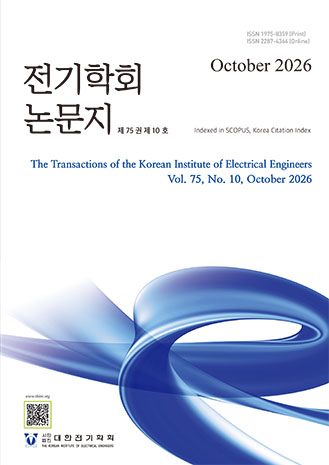
피인용 0
초록·키워드
Metal additive manufacturing can introduce internal defects such as porosity, inclusions, and cracks, yet supervised ultrasonic C-scan detectors are hard to deploy at process introduction, where labeled images are scarce and rare defect classes are imbalanced. We propose a physics-informed C-scan augmentation method that explicitly models six ultrasonic effects, automatically synthesizing labeled images over ten classes. All evaluation is confined to the synthetic domain. Within that scope we verify that input physical parameters are quantitatively transferred to the rendered images: defect contrast increases monotonically with the theoretical reflection coefficient across six impedance levels, and the attenuation coefficient recovered from the images agrees with the input value. The best detector reached mAP@0.5 of 0.705 at a fixed compute budget, and targeted synthetic augmentation of the most signal-sensitive class raised its AP@0.5 from 0.516 to 0.583, while a same-size neutral control gained only 0.009. Public measured laser-ultrasonic amplitude maps of an additively manufactured specimen are included as a quantitative external reference: under a common domain-distance measure the measured domain lies farther from the training distribution than any synthetic shift tested here, which bounds applicability and quantifies the adaptation scale required in future work.
본문·목차


인공지능 문자 인식 모델을 통해 추출된 텍스트로, 일부 오타나 오류가 포함될 수 있으나 지속적으로 개선 중입니다.
오류를 발견하셨다면 해당 부분을 드래그한 후 ' 를 통해 신고해주세요.
오류를 발견하셨다면 해당 부분을 드래그한 후 ' 를 통해 신고해주세요.
최근 본 자료 전체보기





