번역 버튼을 눌러보세요!
1950∼60년대 한국 서민금융정책의 전개와 변화 - 서울특별시 공익전당포를 중심으로 - The Formation and Reorientation of Low-Income Finance Policy in South Korea, 1950s1960s : The Case of the Seoul Metropolitan Public Pawnshop
논문 기본 정보
- 저자정보
- 저널정보
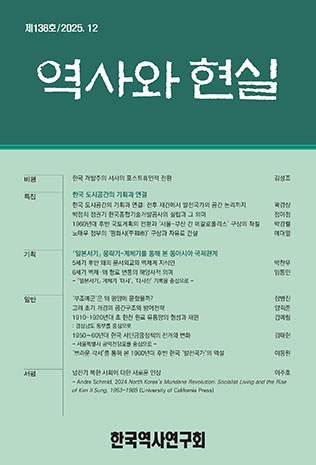
- 한국역사연구회 역사와현실 역사와 현실 제138호
- 발행연도
- 2025.12
- 수록면
- 337 - 374 (38page)
- DOI
- 10.35865/YWH.2025.12.138.337
1950∼60년대 한국 서민금융정책의 전개와 변화 - 서울특별시 공익전당포를 중심으로 -
초록·키워드
This article examines the operation of public pawnshops established and supported at the national level in South Korea after liberation, with a particular focus on the Seoul Municipal Public Pawnshop. Through this case, it seeks to identify changes in South Korea’s low-income finance policies during the 1950s and 1960s. Public pawnshops operated as low-income financial institutions that provided short-term credit at low interest rates. By analyzing the establishment, expansion, and subsequent abolition of public pawnshops within the context of shifts in government financial policy from the 1950s to the 1960s, this study traces broader transformations in contemporaneous low-income finance. Although public pawnshops were established nationwide with active state support during the 1950s, they gradually lost competitiveness in the 1960s amid changes in the financial system and the expansion of private pawnshops, and by the late 1960s most were abolished at the local level. In this respect, public pawnshops can be understood as state-sponsored low-income financial institutions created during a transitional phase, in which low-income finance shifted from direct state provision in the 1950s to reliance on private-sector mechanisms in the 1960s.
본문·목차
인공지능 문자 인식 모델을 통해 추출된 텍스트로, 일부 오타나 오류가 포함될 수 있으나 지속적으로 개선 중입니다.
오류를 발견하셨다면 해당 부분을 드래그한 후 ' 를 통해 신고해주세요.
최근 본 자료 전체보기
UCI(KEPA) : I410-151-26-02-095536506