인문학
사회과학
자연과학
공학
의약학
농수해양학
예술체육학
복합학
 DBpia AI
 AI 에이전트
 AI 아이디어
 AI 리더
AI 리더
 AI 뷰어
AI 뷰어
 Citeasy
크롬 서지관리 다운로드
Citeasy
크롬 서지관리 다운로드
지원사업
학술연구/단체지원/교육 등 연구자 활동을 지속하도록 DBpia가 지원하고 있어요.
커뮤니티
연구자들이 자신의 연구와 전문성을 널리 알리고, 새로운 협력의 기회를 만들 수 있는 네트워킹 공간이에요.
논문 기본 정보
- 자료유형
- 학술저널
- 저자정보
- 저널정보
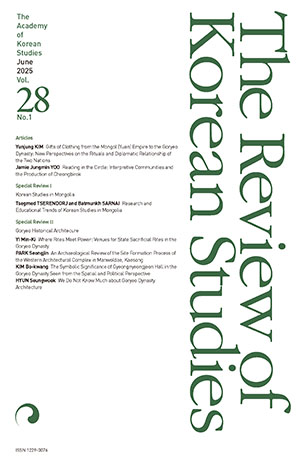
- The Academy of Korean Studies THE REVIEW OF KOREAN STUDIES THE REVIEW OF KOREAN STUDIES Vol.28 No.1
- 발행연도
- 2025.6
- 수록면
- 34 - 58 (25page)
이용수
초록· 키워드
This study reexamines Yi Deok-mu (1741–1793) as a “social reader” and analyzes the formation of his work Cheongbirok through the theoretical lens of “interpretive communities.” While traditional literary history often emphasizes individual genius, this paper argues that literary innovation emerges through complex networks of social interaction, material conditions, and collaborative meaning-making. By tracing how Yi’s personal reading practices intersected with his various interpretive communities—including his immediate intellectual circle in Joseon, cross-border networks with the Qing literati, and the broader East Asian publishing culture—this study reveals the profoundly social nature of literary production in late Joseon Korea. The research makes three primary contributions. First, it demonstrates how Yi’s reinterpretation of Wang Shizhen’s shenyun aesthetic was not merely passive reception but an active process of cultural translation mediated by multiple interpretive communities. Second, it analyzes how the flexible pilgi (miscellaneous writings) format facilitated new modes of knowledge dissemination and literary interpretation within these communities. Third, it examines Yi’s distinctive critical vocabulary centered on “lucidity” (cheong), showing how his aesthetic framework developed through dialogic engagement with both Chinese literary concepts and local interpretive contexts. By examining the social dimensions of literary development in late Joseon, this study challenges conventional models of literary influence and contributes to broader scholarly conversations about reader response theory, cross-cultural literary exchange in East Asia, and the material conditions of knowledge production. It reveals Cheongbirok not as an isolated achievement but as the product of an interconnected network of readers, writers, and texts that collectively shaped new directions in Korean literary history.
#social reader
#implied reader
#interpretive community
#reader response theory
#Cheongbirok
#Yi Deok-mu
#Wang Shizhen
#pilgi
#shenyun
상세정보 수정요청해당 페이지 내 제목·저자·목차·페이지정보가 잘못된 경우 알려주세요!
목차
- Introduction
- Cheongbirok and its Implied Readers
- Shared Values across Interpretive Communities
- Images of “Lucidity” 淸 and “Distance” 遠
- Conclusion
- References
- Abstract
참고문헌
참고문헌 신청최근 본 자료









UCI(KEPA) : I410-151-25-02-093134214