인문학
사회과학
자연과학
공학
의약학
농수해양학
예술체육학
복합학
 DBpia AI
 AI 에이전트
 AI 아이디어
 AI 리더
AI 리더
 AI 뷰어
AI 뷰어
 Citeasy
크롬 서지관리 다운로드
Citeasy
크롬 서지관리 다운로드
지원사업
학술연구/단체지원/교육 등 연구자 활동을 지속하도록 DBpia가 지원하고 있어요.
커뮤니티
연구자들이 자신의 연구와 전문성을 널리 알리고, 새로운 협력의 기회를 만들 수 있는 네트워킹 공간이에요.
논문 기본 정보
- 자료유형
- 학술저널
- 저자정보
- 발행연도
- 2025.6
- 수록면
- 121 - 133 (13page)
- DOI
- 10.17519/apiculture.2025.06.40.2.121
이용수
초록· 키워드
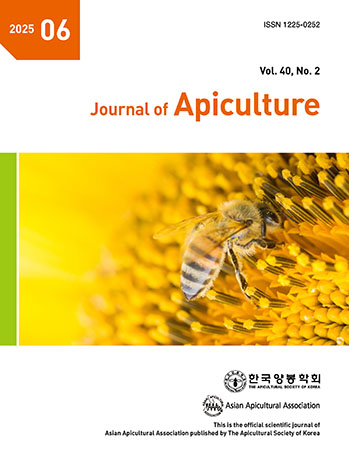
A total of 18 species of insect visitors were observed to visit the sweet orange( Citrus sinensis L. Osbeck) flowers. Among the pollinators the Hymenoptera constituted major group of insects followed by Diptera and Lepidoptera. 18 species of insects belonging to 3 orders, 9 families and 13 genera were honeybees Apis florea F., Apis cerana, Apis dorsata F., Apis mellifera L., Carpenter bees Xylocopa fenestrata, X. pubescens. Besides, Musca spp., Eristalis spp., Syrphid spp., and butterflies were other insect visitors observed on citrus flowers. Of all these insects, honeybees were most abundant and comprised more than 63% of the flower visitors. Insect visitors were found to behave differently to different in Inflorescence height. It was interesting to note that honeybees visited more middle branches than the upper or lower ones whereas carpenter bees collected nectar and pollen mostly from the upper branches. The dipteran insects including Musca spp., Syrphus spp. and small Hymenopteran insects like Nomia and Lasioglossum spp. referred to as ‘others’ mostly visited lower branches. The impact of direction of plant had a pronounced effect on abundance of foraging population. Generally, more population was observed in east and west compared to north and west directions. Population of bees were at par in north and south directions. The results revealed that stratification and directionality had a significance influence on the behaviour of flower visiting insects.
상세정보 수정요청해당 페이지 내 제목·저자·목차·페이지정보가 잘못된 경우 알려주세요!
목차
- Abstract
- INTRODUCTION
- MATERIALS AND METHODS
- RESULTS AND DISCUSSION
- CONCLUSIONS
- LITERATURE CITED
참고문헌
참고문헌 신청최근 본 자료









UCI(KEPA) : I410-151-25-02-093732434