인문학
사회과학
자연과학
공학
의약학
농수해양학
예술체육학
복합학
 DBpia AI
 AI 에이전트
 AI 아이디어
 AI 리더
 AI 뷰어
 Citeasy
크롬 서지관리 다운로드
지원사업
학술연구/단체지원/교육 등 연구자 활동을 지속하도록 DBpia가 지원하고 있어요.
커뮤니티
연구자들이 자신의 연구와 전문성을 널리 알리고, 새로운 협력의 기회를 만들 수 있는 네트워킹 공간이에요.
초록·키워드
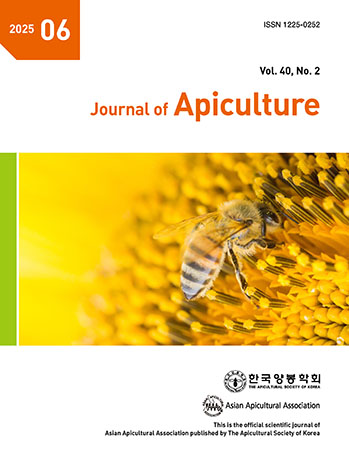
Quality and authenticity of honey are largely determined by its floral origin, geographical factors, and post-harvest handling. Despite the growing significance of apiculture in Uzbekistan, scientific evaluation of domestically available honey remains limited. This study aimed to assess the botanical origin and physicochemical quality of honey samples obtained in Tashkent, Uzbekistan. In 2022, 30 honey samples were collected from apiaries, supermarkets, and Tashkent State Agrarian University. Melissopalynological analyses were conducted to determine the floral origins, classifying samples into 14 groups. Physicochemical parameters, including moisture content, stable carbon isotope ratio(SCIR), hydroxymethylfurfural (HMF), and sugar composition (fructose, glucose, sucrose, reducing sugar, F/G ratio), were analyzed. The results revealed notable variability among floral groups, although most samples adhered to Codex Alimentarius standards. All honey samples produced in Uzbekistan complied with thresholds for moisture (<20%) and HMF(<40 mg/kg). However, the Multifloral( Onobrychis) sample exhibited a SCIR value of -22.8‰ suggesting possible adulteration. The Multifloral( Ferula) sample failed to meet the 60% reducing sugar requirement, and one Onobrychis sample exceeded the 5% sucrose threshold. F/G ratios varied significantly, indicating differing crystallization tendencies. Additionally, while the overall effect of local origin was limited, statistically significant differences in moisture and F/G ratio were detected. These findings suggest that environmental exposure, handling, or storage conditions may influence specific quality attributes independently of floral origin. The combined application of melissopalynological, chemical, and isotopic analyses proved effective for comprehensive quality evaluation, highlighting the primary role of floral and geographical factors, along with minor contributions from distribution-related factors, in shaping honey quality.
본문·목차


인공지능 문자 인식 모델을 통해 추출된 텍스트로, 일부 오타나 오류가 포함될 수 있으나 지속적으로 개선 중입니다.
오류를 발견하셨다면 해당 부분을 드래그한 후 ' 를 통해 신고해주세요.
오류를 발견하셨다면 해당 부분을 드래그한 후 ' 를 통해 신고해주세요.
최근 본 자료 전체보기




UCI(KEPA) : I410-151-25-02-093732407

