인문학
사회과학
자연과학
공학
의약학
농수해양학
예술체육학
복합학
 DBpia AI
 AI 에이전트
 AI 아이디어
 AI 리더
 AI 뷰어
 Citeasy
크롬 서지관리 다운로드
지원사업
학술연구/단체지원/교육 등 연구자 활동을 지속하도록 DBpia가 지원하고 있어요.
커뮤니티
연구자들이 자신의 연구와 전문성을 널리 알리고, 새로운 협력의 기회를 만들 수 있는 네트워킹 공간이에요.
피인용 0
초록·키워드
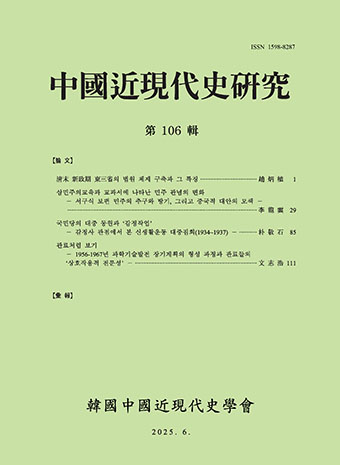
The aim of this study is to demonstrate that the formation process of The Long-term Plan for the Development of Science and Technology for 1956–1967 (1956–1967年科學技術發展遠景規劃, hereafter the “Twelve-Year Plan”), announced in 1956, played a decisive role in enabling scientists within the Chinese Academy of Sciences (中國科學院, CAS) to retain an exceptional status and continue their research activities during the Anti-Rightist Campaign in mid-twentieth-century China. As China’s first comprehensive science and technology policy document, its drafting process involved not only high-level central officials but also field-level bureaucrats dispatched by the Party to CAS. These working-level cadres were initially unfamiliar with science. However, through sustained dialogue and cooperation with scientists, they gradually acquired what may be called “interactional expertise”—the capacity to understand scientific language and concerns and to translate them into politically legible policy formulations. In collaborating with scientists, these cadres emerged as the often “unrecognized” architects behind the successful planning of the Twelve-Year Plan. More importantly, the trust and cooperative relationships they cultivated with scientists provided a degree of protection for scientific personnel during the politically repressive years after 1957. By reexamining the formation of the Twelve-Year Plan through the lens of those who were “seeing like a bureaucrats,” this study offers a new historical interpretation of the relationship between science and politics under Mao, and highlights the bureaucratic dynamics that sustained scientific continuity amid political rupture.
#중국과학기술정책
#1956-1967년 중국과학기술 장기발전계획
#중국과학원
#관료
#상호작용적 전문성
#장진푸
#中国科学技术政策
#1956-1967年科学技术发展远景规划
#中国科学院
#官僚
#交互型专长
#张劲夫
#Chinese Science and Technology Policy
#1956 the Twelve-Year Science and Technology Plan of China
#the Chinese Academy of Sciences (CAS)
#Bureaucrat
#Interactional Expertise
#Zhang Jinfu
본문·목차


인공지능 문자 인식 모델을 통해 추출된 텍스트로, 일부 오타나 오류가 포함될 수 있으나 지속적으로 개선 중입니다.
오류를 발견하셨다면 해당 부분을 드래그한 후 ' 를 통해 신고해주세요.
오류를 발견하셨다면 해당 부분을 드래그한 후 ' 를 통해 신고해주세요.
최근 본 자료 전체보기




UCI(KEPA) : I410-151-25-02-093928145

