인문학
사회과학
자연과학
공학
의약학
농수해양학
예술체육학
복합학
 DBpia AI
 AI 에이전트
 AI 아이디어
 AI 리더
AI 리더
 AI 뷰어
AI 뷰어
 Citeasy
크롬 서지관리 다운로드
Citeasy
크롬 서지관리 다운로드
지원사업
학술연구/단체지원/교육 등 연구자 활동을 지속하도록 DBpia가 지원하고 있어요.
커뮤니티
연구자들이 자신의 연구와 전문성을 널리 알리고, 새로운 협력의 기회를 만들 수 있는 네트워킹 공간이에요.
피인용 0
초록·키워드
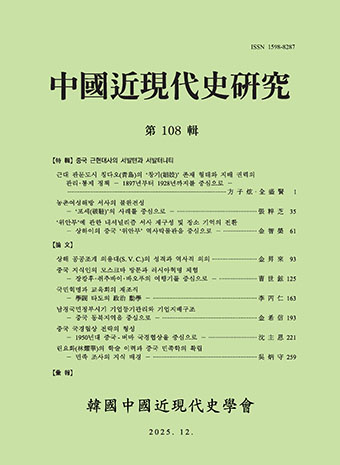
This dissertation takes the prostitution industry as its object of study and examines the forms of existence of prostitutes in Qingdao between 1897 and 1928, the mechanisms through which they were managed, and the changes in governing policies adopted by ruling authorities in relation to this industry. As an important treaty port in modern China, Qingdao exhibited pronounced colonial and international characteristics in the course of its urban development and population mobility, and the prostitution industry likewise gradually developed a pluralistic and complex structure within this process. With the growth of the urban economy and the large-scale influx of population, the composition of prostitutes’ origins became increasingly diversified: in addition to local Chinese prostitutes (Huaji), Japanese and Russian prostitutes also emerged as groups that could not be overlooked within Qingdao’s prostitution industry. Among them, Russian prostitutes predominantly adopted a seasonal mode of operation, engaging actively in business along coastal streets during the summer months. This pattern of operation vividly highlights Qingdao’s characteristics as a gateway port city.
From the perspective of governance, this dissertation seeks to elucidate the subjective agency and social significance of prostitutes as a subaltern group by analyzing the survival strategies they adopted within the process of urban modernization. During the period of German leasehold rule, the colonial authorities incorporated prostitutes into a hygienically oriented and scientized management system—measures that, in practice, constituted infringements upon women’s rights. Following Japan’s occupation of Qingdao, the existing licensed prostitution system was inherited and further strengthened, with the aim of fully incorporating prostitution into the scope of official control and regulation. After the Beiyang government assumed control of Qingdao, the licensed prostitution system was largely maintained; however, under the influence of nationalist discourse and currents of social reform, public opinion calling for the abolition of prostitution (feichang) began to emerge, accompanied by preliminary measures of institutional adjustment.
As this analysis demonstrates, the rise and decline of the prostitution industry and the transformations in policies governing it not only reflect shifts in political power and changes in social structure during Qingdao’s transition from a colonial port to a national city, but also reveal the complex and intertwined operation of colonial modernity, nationalism, and social control within the framework of urban governance in modern China.
From the perspective of governance, this dissertation seeks to elucidate the subjective agency and social significance of prostitutes as a subaltern group by analyzing the survival strategies they adopted within the process of urban modernization. During the period of German leasehold rule, the colonial authorities incorporated prostitutes into a hygienically oriented and scientized management system—measures that, in practice, constituted infringements upon women’s rights. Following Japan’s occupation of Qingdao, the existing licensed prostitution system was inherited and further strengthened, with the aim of fully incorporating prostitution into the scope of official control and regulation. After the Beiyang government assumed control of Qingdao, the licensed prostitution system was largely maintained; however, under the influence of nationalist discourse and currents of social reform, public opinion calling for the abolition of prostitution (feichang) began to emerge, accompanied by preliminary measures of institutional adjustment.
As this analysis demonstrates, the rise and decline of the prostitution industry and the transformations in policies governing it not only reflect shifts in political power and changes in social structure during Qingdao’s transition from a colonial port to a national city, but also reveal the complex and intertwined operation of colonial modernity, nationalism, and social control within the framework of urban governance in modern China.
본문·목차


인공지능 문자 인식 모델을 통해 추출된 텍스트로, 일부 오타나 오류가 포함될 수 있으나 지속적으로 개선 중입니다.
오류를 발견하셨다면 해당 부분을 드래그한 후 ' 를 통해 신고해주세요.
오류를 발견하셨다면 해당 부분을 드래그한 후 ' 를 통해 신고해주세요.
최근 본 자료 전체보기




UCI(KEPA) : I410-151-26-02-096066656

