인문학
사회과학
자연과학
공학
의약학
농수해양학
예술체육학
복합학
 DBpia AI
 AI 에이전트
 AI 아이디어
 AI 리더
AI 리더
 AI 뷰어
AI 뷰어
 Citeasy
크롬 서지관리 다운로드
Citeasy
크롬 서지관리 다운로드
지원사업
학술연구/단체지원/교육 등 연구자 활동을 지속하도록 DBpia가 지원하고 있어요.
커뮤니티
연구자들이 자신의 연구와 전문성을 널리 알리고, 새로운 협력의 기회를 만들 수 있는 네트워킹 공간이에요.
논문 기본 정보
- 자료유형
- 학술저널
- 저자정보
- 발행연도
- 2026.05
- 수록면
- 130 - 159 (30page)
- DOI
- 10.38080/crh.2026.05.155.130
이용수
초록· 키워드
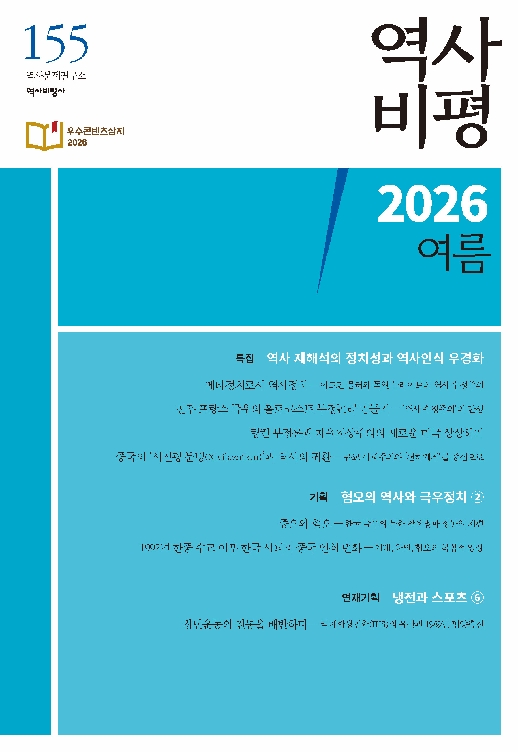
This article analyzes how South Korean far-right political forces have mobilized North Korea as a core political resource since the national division, with a focus on the dimension of affect. The dominant affective form directed at North Korea has been reorganized in accordance with shifting historical conditions: “hatred” (chŭngo) served as the primary affective medium during the Cold War and wartime period, while “contempt” (hyŏmo) assumed that role in the post-Cold War and neoliberal era. During the Cold War, the far-right embodied anti-communism at the popular level through an array of legal, institutional, and cultural mechanisms ― including the National Security Act, anti-communist education curricula, oratory competitions, and animated propaganda films. In this process, North Korea was constructed as an absolute evil to be annihilated through animalized representations, and conservative Protestant forces sacralized anti-communism as a matter of faith, endowing hatred with metaphysical legitimacy. From the 1990s onward, the dissolution of the Cold War order and the neoliberal transition reinforced the image of North Korea as a “declining other,” prompting the far-right to reorganize its affective strategy away from the grammar of hatred toward a mockery-based contempt rooted in a sense of superiority. The chongbuk (“pro-North”) frame, in particular, functioned as a mechanism for articulating anti-North Korean affect with misogyny, homophobia, and anti-immigrant sentiment. Since the 2010s, the digital media environment has enabled the everyday circulation of “softened contempt,” further popularizing the far-right’s politics of affect across wider publics. This article demonstrates that the historical variation between hatred and contempt represents not merely a strategic choice on the part of the far-right, but a political formation shaped by the structural condition of national division ― a terrain that Korean society as a whole shares.
#far-right
#anti-North Korean affect
#politics of affect
#anti-communism
#“chongbuk” frame
#neoliberalism
#softened contempt
상세정보 수정요청해당 페이지 내 제목·저자·목차·페이지정보가 잘못된 경우 알려주세요!
목차
- 서론: ‘적(敵)’의 지속성과 정동의 재조직
- 1. 냉전기의 극우와 증오의 정동
- 2. 신자유주의 전환과 정동 구조의 변화
- 결론: 극우의 자기 이해와 ‘필요한 적’으로서의 북한
- 참고문헌
참고문헌
참고문헌 신청최근 본 자료