인문학
사회과학
자연과학
공학
의약학
농수해양학
예술체육학
복합학
 DBpia AI
 AI 에이전트
 AI 아이디어
 AI 리더
 AI 뷰어
 Citeasy
크롬 서지관리 다운로드
개인구독
소속 기관이 없으신 경우, 개인 정기구독을 하시면 저렴하게
논문을 무제한 열람 이용할 수 있어요.
지원사업
학술연구/단체지원/교육 등 연구자 활동을 지속하도록 DBpia가 지원하고 있어요.
커뮤니티
연구자들이 자신의 연구와 전문성을 널리 알리고, 새로운 협력의 기회를 만들 수 있는 네트워킹 공간이에요.
중국어 교재 텍스트의 어법 표현과 사회문화적 의미 구성 ― 『成功之路』를 중심으로 A Study on Grammatical Expressions and the Construction of Sociocultural Meaning in Chinese Textbook Texts : Focusing on Cheng gong zhi lu
논문 기본 정보
- 저자정보
- 저널정보
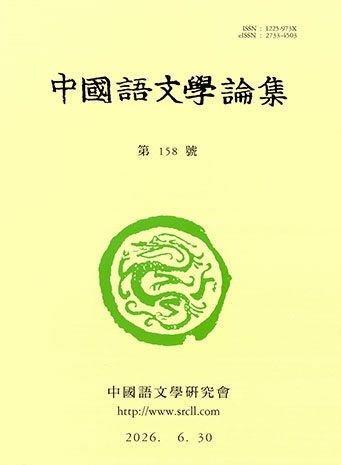
- 중국어문학연구회 중국어문학논집 中國語文學論集 第158號
- 발행연도
- 2026.6
- 수록면
- 267 - 289 (23page)
- DOI
- 10.25021/JCLL.2026.6.158.267
피인용 0
중국어 교재 텍스트의 어법 표현과 사회문화적 의미 구성 ― 『成功之路』를 중심으로
초록·키워드
This study aims to investigate how grammatical expressions in Chinese textbook texts construct sociocultural meaning within discourse, focusing on Chenggong zhi Lu. While previous studies on Chinese textbooks mainly concentrated on the arrangement and explanation of grammatical items, this study approaches grammatical expressions not merely as formal linguistic structures but as discourse resources that construct values, relational norms, and social expectations.
The analysis was conducted on texts from Chenggong zhi Lu (Progress Volumes 1–2 and Intermediate Volumes 1–2), focusing on obligation expressions, suggestion expressions, and evaluative expressions through qualitative discourse analysis. The study examined the situational context, speaker relationships, and discourse development surrounding each expression. Sociocultural meaning categories were classified into normative values, relational orientation, social expectations, and emotional culture.
The findings show that obligation expressions function to construct role performance and normative awareness required in society, while suggestion expressions reveal relational management and indirect interactional strategies. Evaluative expressions were found to organize criteria for judgment and value orientation toward specific situations. In addition, a comparison across proficiency levels demonstrated that lower-intermediate texts mainly employ single-function expressions centered on behavioral demands, whereas intermediate-level texts increasingly utilize multi-functional expressions combining condition, comparison, and evaluative functions.
This study is significant in that it analyzes grammatical expressions in Chinese textbooks as discourse resources that construct sociocultural meaning. It further suggests that Chinese grammar instruction should move beyond structural explanation and incorporate discourse context and meaning-making functions into language education.
본문·목차


인공지능 문자 인식 모델을 통해 추출된 텍스트로, 일부 오타나 오류가 포함될 수 있으나 지속적으로 개선 중입니다.
오류를 발견하셨다면 해당 부분을 드래그한 후 ' 를 통해 신고해주세요.
오류를 발견하셨다면 해당 부분을 드래그한 후 ' 를 통해 신고해주세요.
최근 본 자료 전체보기





UCI(KEPA) : I410-151-26-02-097671697

