인문학
사회과학
자연과학
공학
의약학
농수해양학
예술체육학
복합학
 DBpia AI
 AI 에이전트
 AI 아이디어
 AI 리더
AI 리더
 AI 뷰어
AI 뷰어
 Citeasy
크롬 서지관리 다운로드
Citeasy
크롬 서지관리 다운로드
지원사업
학술연구/단체지원/교육 등 연구자 활동을 지속하도록 DBpia가 지원하고 있어요.
커뮤니티
연구자들이 자신의 연구와 전문성을 널리 알리고, 새로운 협력의 기회를 만들 수 있는 네트워킹 공간이에요.
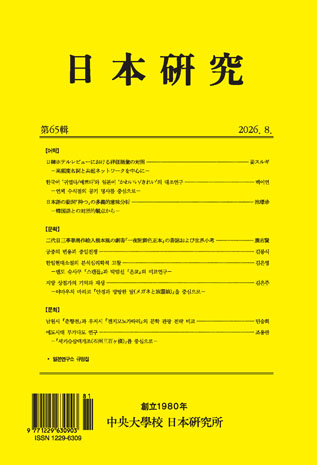
피인용 0
초록·키워드
This study compared the lexical organization of Japanese and Korean hotel reviews. Morphological analysis was applied to 8,177 Japanese and 1,354 Korean Booking.com reviews from Tokyo and Seoul to examine frequent nouns, core-noun co-occurrence networks, and positive/negative-field vocabulary. Given the different analyzers, POS(Part of Speech) systems, and word units, within-language structures were compared, rather than cross-linguistic frequencies. Heya(“room”) in Japanese and wichi(“location”) in Korean ranked highest in frequency, document frequency, and weighted degree. Their networks were in contrast: heya organizes terms for room conditions, comfort, facilities, and sensory environments, while wichi organizes terms for accessibility, urban mobility, and surroundings. Evaluations were asymmetric. Japanese negative reviews centered on heya, whereas positive reviews extended to staff and location; Korean positive reviews centered on wichi, whereas negative reviews were dispersed across domains. The results reveal distinct lexical frameworks for hotel evaluations and show, in contrast to Koreans, a Japanese tendency toward mitigated, room-centered criticism.
본문·목차


인공지능 문자 인식 모델을 통해 추출된 텍스트로, 일부 오타나 오류가 포함될 수 있으나 지속적으로 개선 중입니다.
오류를 발견하셨다면 해당 부분을 드래그한 후 ' 를 통해 신고해주세요.
오류를 발견하셨다면 해당 부분을 드래그한 후 ' 를 통해 신고해주세요.
최근 본 자료 전체보기





