인문학
사회과학
자연과학
공학
의약학
농수해양학
예술체육학
복합학
 DBpia AI
 AI 에이전트
 AI 아이디어
 AI 리더
 AI 뷰어
 Citeasy
크롬 서지관리 다운로드
지원사업
학술연구/단체지원/교육 등 연구자 활동을 지속하도록 DBpia가 지원하고 있어요.
커뮤니티
연구자들이 자신의 연구와 전문성을 널리 알리고, 새로운 협력의 기회를 만들 수 있는 네트워킹 공간이에요.
피인용 0
초록·키워드
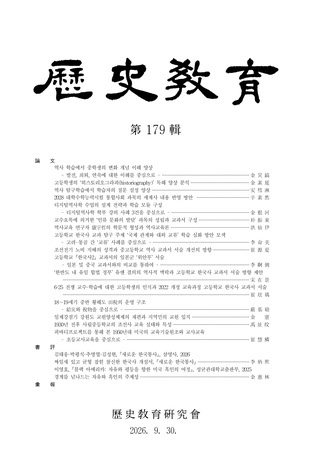
The introduction of Integrated Social Studies as a compulsory subject in the 2028 Korean College Scholastic Ability Test is expected to substantially reshape high school social studies education and subject selection. This study examines the position of world history within this new assessment system by analysing the 2022 revised curriculum, relevant textbooks, and nationwide academic achievement test items. The analysis shows that, although the Integrated Social Studies curriculum includes topics closely related to world history, such as human rights, capitalism, industrialisation, globalisation, and peace, historical content is often presented in a fragmented manner with limited attention to chronology, causation, and broader historical context. World history is also only marginally represented in current assessment practices.
To address these limitations, this study proposes integrating stronger world-historical contexts into major topics in Integrated Social Studies and developing more diverse assessment items that reinterpret and reorganise historical materials. It also argues that the World History curriculum should incorporate key East Asian history content and move toward a narrative-based structure that emphasises historical interpretation, argumentation, and inquiry rather than the accumulation of discrete factual knowledge. Assessment should likewise expand beyond factual recall to include source analysis, interpretation, evaluation, and written responses. These reforms may strengthen the educational relevance of world history while preserving the distinctive disciplinary value of history within the emerging Integrated Social Studies assessment system.
To address these limitations, this study proposes integrating stronger world-historical contexts into major topics in Integrated Social Studies and developing more diverse assessment items that reinterpret and reorganise historical materials. It also argues that the World History curriculum should incorporate key East Asian history content and move toward a narrative-based structure that emphasises historical interpretation, argumentation, and inquiry rather than the accumulation of discrete factual knowledge. Assessment should likewise expand beyond factual recall to include source analysis, interpretation, evaluation, and written responses. These reforms may strengthen the educational relevance of world history while preserving the distinctive disciplinary value of history within the emerging Integrated Social Studies assessment system.
본문·목차


인공지능 문자 인식 모델을 통해 추출된 텍스트로, 일부 오타나 오류가 포함될 수 있으나 지속적으로 개선 중입니다.
오류를 발견하셨다면 해당 부분을 드래그한 후 ' 를 통해 신고해주세요.
오류를 발견하셨다면 해당 부분을 드래그한 후 ' 를 통해 신고해주세요.
최근 본 자료 전체보기







